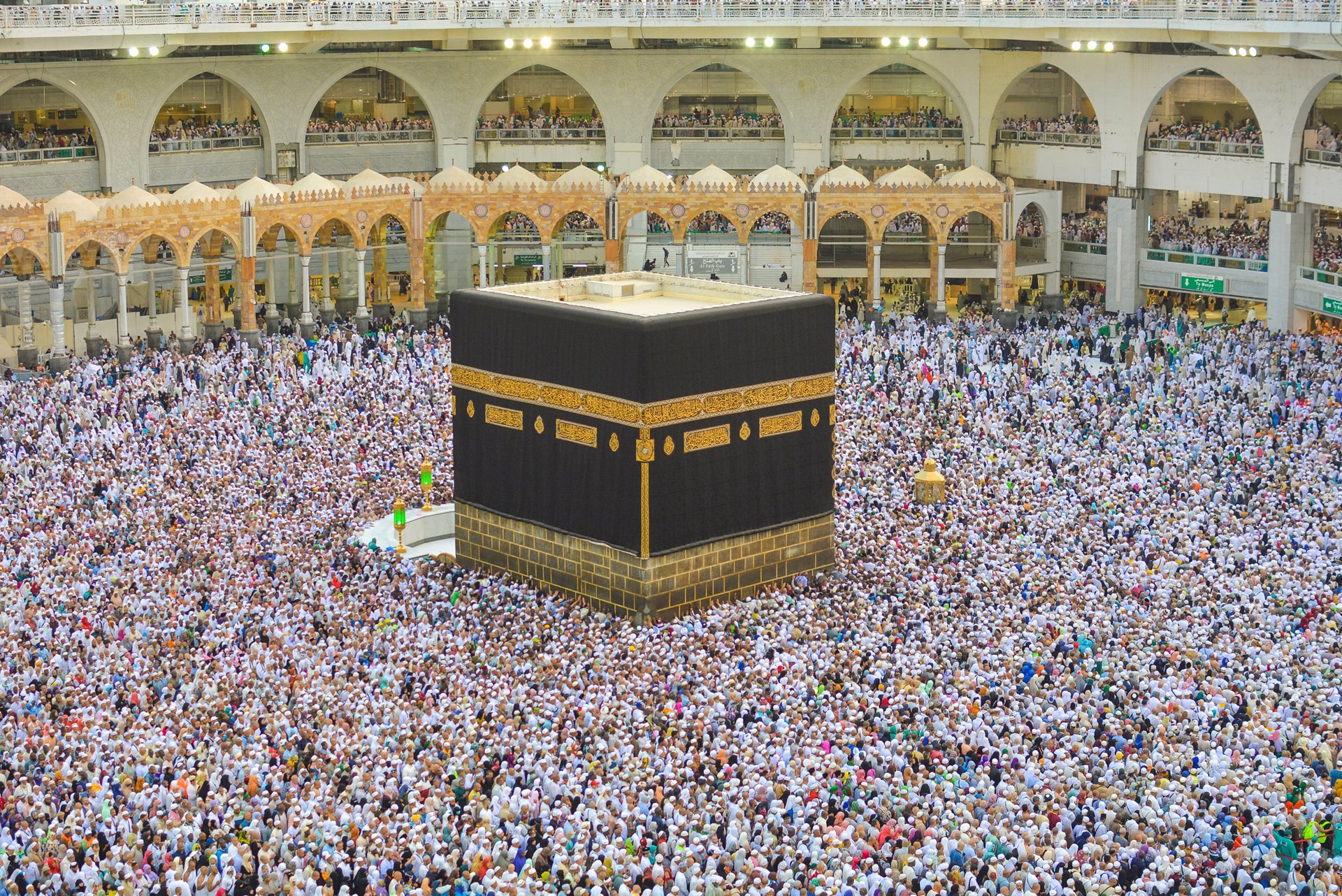
What is Umrah?
Umrah is an act of worship consisting of entering Ihram, performing Tawaf around the Kaaba, Sa'y between Safa and Marwa, and then shaving or trimming the hair. It can be performed at any time of year. The Prophet ﷺ said: "One Umrah to the next is an expiation for what is between them" (Bukhari & Muslim).
Pillars and obligations
| Type | Elements |
|---|---|
| Pillars (Umrah is invalid without them) | Ihram (intention) — Tawaf — Sa'y |
| Obligations (omission requires a sacrifice) | Entering Ihram at the miqat — shaving or trimming |
Some jurists (e.g. the Shafi'i school) consider shaving/trimming a pillar. Where scholars differ, follow a scholar you trust or your national fatwa authority.
The Miqat boundaries
| Miqat | For whom | Note |
|---|---|---|
| Dhul-Hulayfah (Abyar Ali) | People of Madinah and those passing through it | Farthest from Makkah (~420 km) |
| Al-Juhfah (today pilgrims use Rabigh) | Egypt, the Levant, North Africa | Flying from Egypt: enter Ihram on the plane before passing the miqat |
| Qarn al-Manazil (As-Sayl al-Kabir) | Najd and Taif | Wadi Muharram is aligned with it |
| Yalamlam (As-Sa'diyyah) | Yemen and those coming from that direction | |
| Dhat 'Irq | Iraq |
Important when flying from Egypt: Jeddah airport lies inside the miqat boundary. If you intend Umrah and fly straight to Jeddah, you must make your intention on the plane when the crew announces the miqat. You may wear the Ihram garments before take-off and make the intention when you pass the miqat. If your trip starts in Madinah, enter Ihram at Dhul-Hulayfah on your way to Makkah.
Performing Umrah step by step
1) Preparing for Ihram
- Take a bath, apply perfume to the body (not the Ihram garments), and trim nails and hair before Ihram.
- Men: two clean white sheets (izar and rida') and sandals that leave the ankles uncovered. Women: any modest clothing; no niqab and no gloves.
2) Intention and Talbiyah
At the miqat, make the intention in your heart and say "Labbayk Allahumma 'Umrah". If you fear being prevented, add the conditional clause: "If I am held back, my release is where I am held back." Then repeat the Talbiyah: "Labbayk Allahumma labbayk, labbayk la sharika laka labbayk, inna al-hamda wan-ni'mata laka wal-mulk, la sharika lak." Men raise their voices; women say it quietly. Stop when you begin Tawaf.
3) Tawaf — seven circuits
- Enter the Haram with your right foot, saying: "Bismillah, Allahumma iftah li abwaba rahmatik."
- Men uncover the right shoulder (idtiba') during this Tawaf.
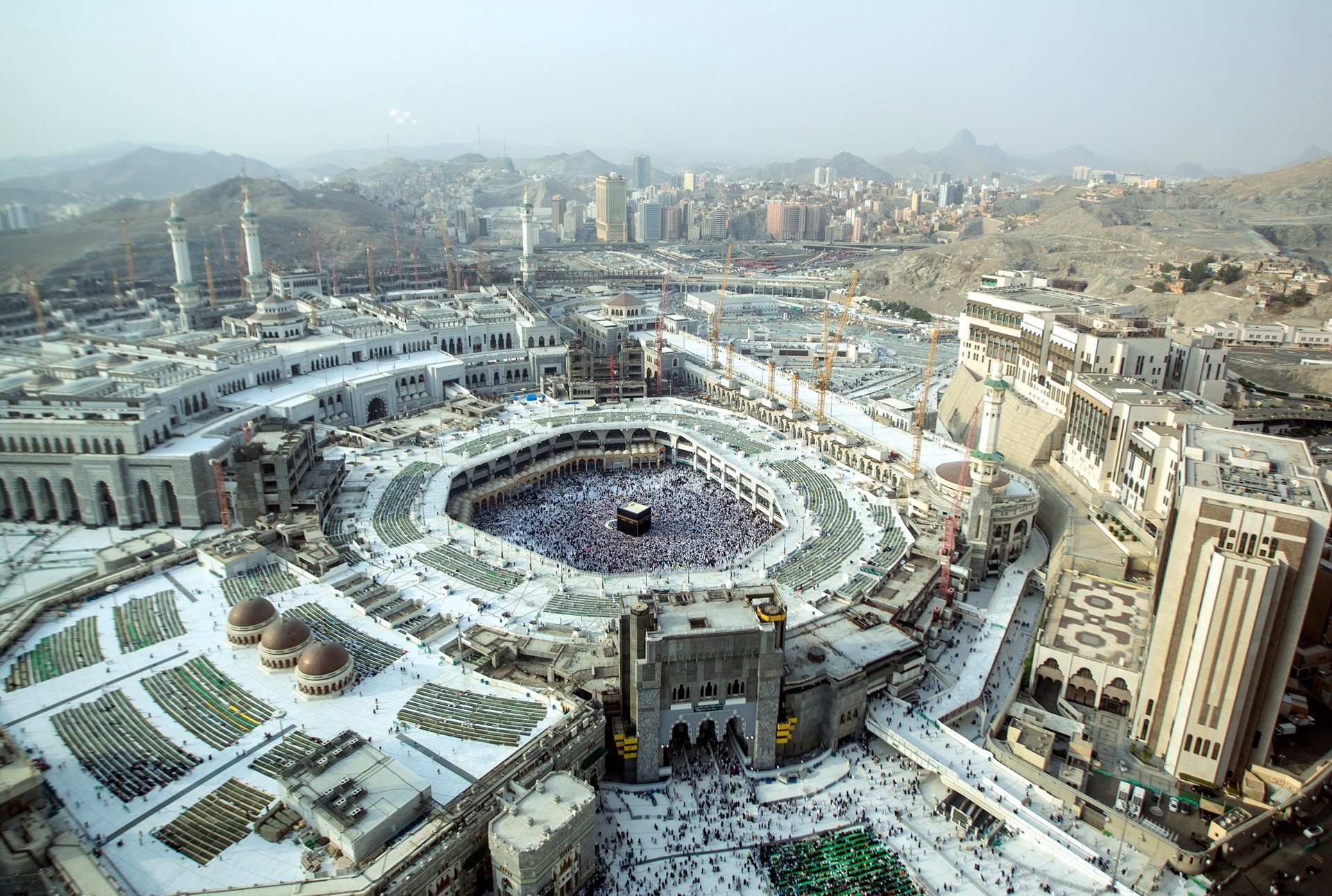
- Start at the Black Stone (marked by a green light), face it, raise your hand and say "Bismillah, Allahu Akbar". Keep the Kaaba on your left.
- Men walk briskly (raml) in the first three circuits if possible.
- Between the Yemeni Corner and the Black Stone say: "Rabbana atina fid-dunya hasanah wa fil-akhirati hasanah wa qina 'adhaban-nar."
- There is no specific supplication for each circuit; pray as you like and recite the Qur'an.
- Most scholars require ritual purity (wudu) for Tawaf.
4) Two rak'ahs and Zamzam
Pray two rak'ahs behind Maqam Ibrahim if possible, otherwise anywhere in the mosque (recite al-Kafirun and al-Ikhlas), then drink Zamzam.
5) Sa'y — seven laps between Safa and Marwa
- Climb Safa and recite: "Indeed, Safa and Marwa are among the symbols of Allah", face the Qibla, glorify Allah and supplicate.
- Safa → Marwa is lap one, Marwa → Safa is lap two, ending at Marwa.
- Men hasten between the green lights.
- Wudu is not required for Sa'y.
6) Shaving or trimming
- Men: shaving is better, or trim from the whole head.
- Women: trim a fingertip's length (~2 cm) from the ends of the hair. Your Umrah is complete and all Ihram restrictions are lifted.
Prohibitions of Ihram
- Removing hair or clipping nails.
- Applying perfume after entering Ihram.
- For men: covering the head with something attached, and wearing tailored clothing shaped to the body.
- For women: niqab and gloves.
- Hunting land game.
- Contracting marriage.
- Marital relations and foreplay.
Many scholars hold that a prohibition committed through forgetfulness or ignorance carries no penalty, while a deliberate one requires expiation (fidyah). Ask a qualified scholar about your specific case.
Practical tips
- Quieter Tawaf times: usually about two hours after Fajr, between Dhuhr and Asr outside summer, and after midnight.
- Upper floors and the roof suit elderly pilgrims; electric and manual carts are bookable via Nusuk or inside the mosque.
- Agree on a meeting gate with your family (e.g. King Abdulaziz Gate no. 1 or King Fahd Gate no. 79).
- Carry a card with your hotel name and your group leader's number.
Official sources
- وزارة الحج والعمرة | Ministry of Hajj and Umrah
- منصة نسك | Nusuk platform
- دار الإفتاء المصرية | Egyptian Dar al-Ifta
Last updated: 4 November 2026 — Procedures change; check the official source before travelling.